Burrr.io: A Real-Time Multiplayer Game That Runs on a Cheap Phone and Even Offline
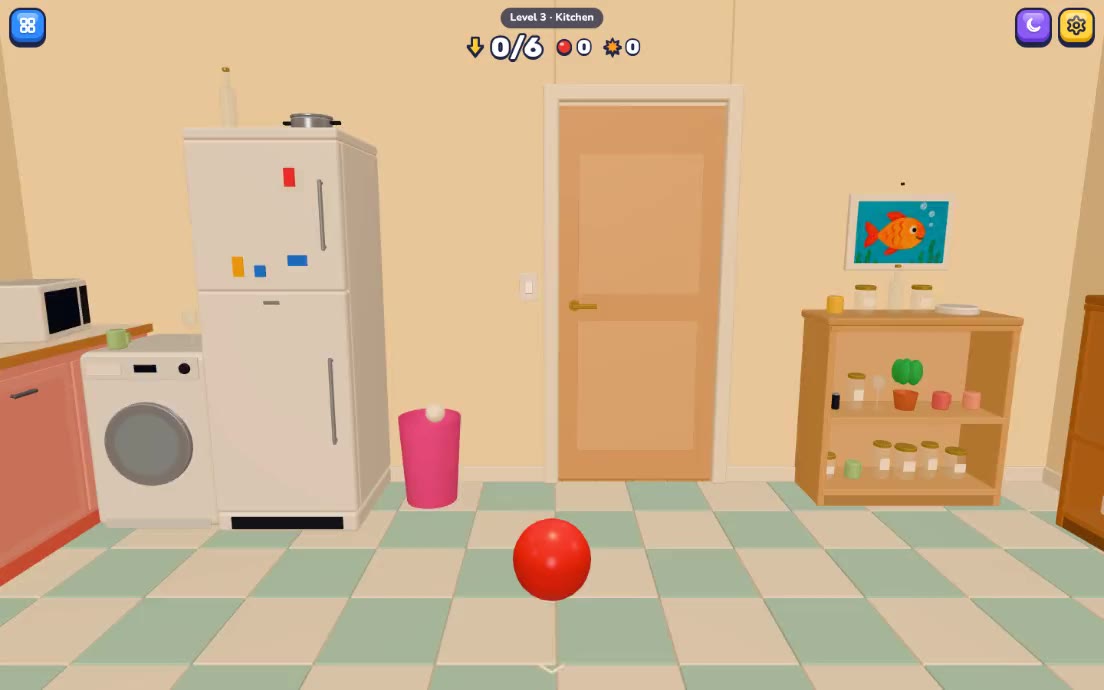
Drills dig through a round planet and hunt each other by the sound of their engines. A free browser game for desktop and phones, built by us end to end: the real-time server, the bots, the battery work and an offline mode.
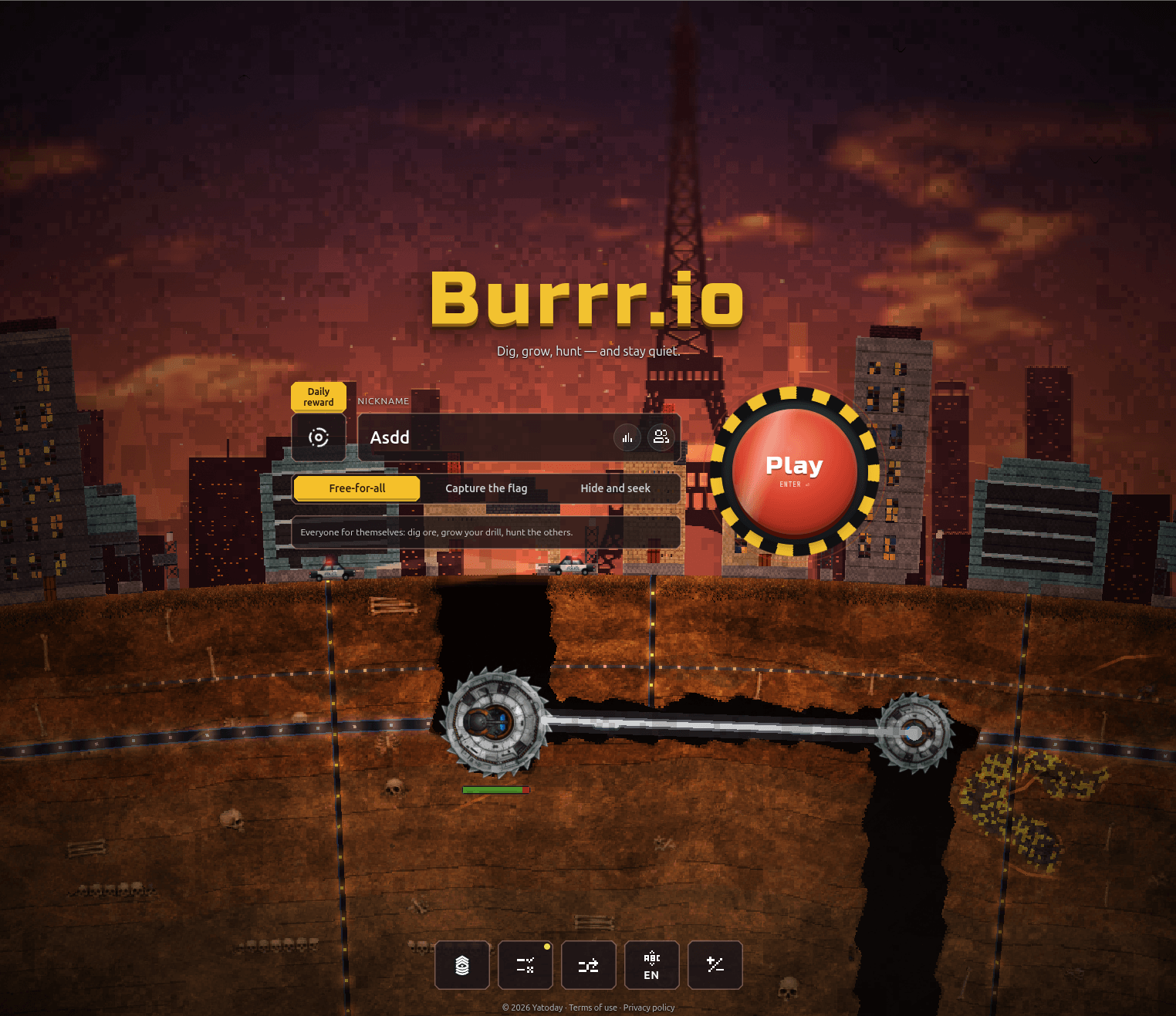
Drills dig through a round planet and hunt each other by the sound of their engines.
Free in the browser, on desktop and phones, with no install and no sign-up. Play at burrr.io
How It Plays
- Kill your engine to vanish from sonar: every drill is heard before it is seen, and silence is how you set an ambush.
- Watch the ground, because it fights back: lakes flood your tunnel, sand collapses and buries you, and where water meets lava, the lava turns to stone.
- Dig through the core and come out on the other side of the planet, past clay, basalt and magma, where the ore gets richer and the digging harder.
- Pick a mode: a free-for-all for up to 40 players, capture the flag, or hide and seek, and bring a squad of up to four friends with a code or a link.
- Climb ten ranks, earn medals for combat and achievements for everything else, and come back every day for a reward that grows with your streak.
Burrr.io is our own product, in English, Spanish and Russian: the kind of engineering we sell, in something anyone can open in a second.
A Real-Time Server, and Bots That Play Like People
In a multiplayer game, whatever the browser is trusted with, someone will fake. So the browser sends only input: course, boost, item, silence. Everything else is decided on our server, written in Go: movement, digging, damage, the physics of sand, water and lava, the bots. The game runs at 20 ticks a second, and each player receives only what their drill can see, so a hacked client has nothing hidden to reveal. The map costs no traffic: the planet is generated from a seed, bit for bit the same on the server and in the browser.
An empty room is a dead game, so bots fill each free-for-all room up to fifteen participants and step aside when a real player joins. Nothing on the network marks them as bots. They have plausible nicknames, decide only by what they see and hear, so silence works against them too, and each has its own style: reaction time, aim that drifts, a point at which it gives up a fight and runs.
Built Not to Drain a Phone
A phone pays for every frame in heat and battery, so performance is a rule of the project, not a final polish. We measure on real devices with the phone’s own charge counter, before and after every change. One round of profiling on a Galaxy S23 brought the game’s own power draw from about 460 mA to about 350 mA, a quarter less, and a battery saver takes it to about 310 mA. Most of that came from the ground shader and from never recomputing on every frame what only changes on a tick.
Old phones get the same care. On a Galaxy S8+ from 2017, the lowest quality level runs at 31–38 frames a second, and the game picks that level by itself when it recognises a weak graphics chip.
Playing Without Internet
The Go game server is also compiled to WebAssembly and can run inside the page. When there is no connection, or our server does not answer, the game starts against bots on that built-in server, with a notice at the top: no internet, progress is not saved. Offline progress really is not kept anywhere. When the connection comes back, the notice offers to return to online play.
A service worker keeps a copy of the game in the browser, so it opens even with no network at all.
Analytics, Deploys and a Native App
The game has its own product analytics and an admin page: visits, funnel, retention cohorts, traffic sources, who is playing right now, and load times, frame rate and latency by device. Page beacons use no cookies.
The game server also serves the website itself, and a push to the main branch deploys through GitLab CI without dropping anyone: the new server process starts next to the old one on the same ports, the old one stops taking new players and lets its matches play out.
A native Android version in Unity is in development and plays on the same server, with the same protocol and the same map generation, checked against shared test data. It is not public yet.
What This Means for Your Project
- If your product needs many people seeing the same thing at once, such as live bookings, dashboards, auctions or collaboration, we build the real-time server for that live app, keeping everyone in sync and the rules on our side, not in the browser.
- Configurators, maps and interactive visuals in 3D and 2D run fast in the browser even on cheap phones, and we measure that on real low-end devices rather than assume it.
- We build offline-capable web apps that keep working without a connection, and native mobile ports that reuse the logic and the server you already have instead of starting over.
Status
Burrr.io is live and free to play in the browser; the Android app is still in development.
Tech Stack
- Client: TypeScript + Vite, PixiJS 8 (WebGL), custom terrain shader, HTML/CSS interface
- Game server: Go, one room per goroutine, 20 ticks a second, server-side fog of war
- Protocol: WebSocket, custom binary format, shared test vectors for Go and TypeScript
- Map: procedural round planet, generated identically from a seed on client and server
- Offline: the Go server compiled to WebAssembly in a Web Worker, service worker copy of the game
- Database: MySQL 8.4 (guest accounts, progress, statistics, leaderboards, analytics)
- Hosting: Hetzner, Germany; the game server also serves the site
- CI/CD: GitLab CI, Docker, deploys that let running matches finish
- Native app (in development): Unity 6, C#, same server and protocol
- Languages: English, Spanish, Russian
Result
A browser game that starts in one click on a computer or a phone, keeps working without internet and runs on a phone from 2017, on top of a Go server that leaves cheaters nothing to fake and battery numbers measured on real devices.